
From Manual to Modern: A Roadmap for UK Business Digitization
In the fast‑evolving world of commerce, UK businesses of all sizes are facing the same reality: digital transformation is no longer optional — it’s essential. Whether you’re a local retailer, council service provider, or a fast‑growing tech startup, moving away from outdated manual processes and embracing digital solutions can dramatically improve efficiency, customer experience, and competitiveness.
Below we’ll outline the roadmap to digitization and explore real examples of how UK organisations have modernised to thrive in today’s digital economy.




Why Digitization Matters for UK Businesses
Digitization means integrating digital technologies into all areas of a business. That might include shifting paper‑based workflows into cloud platforms, automating internal processes, or using data to drive smarter decisions.
For UK businesses, the benefits are clear:
- Improved efficiency — fewer manual tasks, faster turnaround times.
- Better customer experiences — seamless online interactions.
- Greater competitiveness — agility to adapt to change.
- Cost savings — through automation and optimisation.
- Scalability — systems that grow with your business.
However, transformation isn’t always easy. Many organisations face hurdles like legacy systems, skills gaps and resistance to change. Understanding how others have tackled these challenges makes the journey easier.
Step 1: Assess Your Starting Point
Before pursuing digital change, a business must understand where it currently stands.
Identify Manual Pain Points
Look at areas that rely heavily on human effort:
- Paper‑based processes
- Phone and email‑only communication
- Excel spreadsheets for coordination
- Manual filing, logging, and document handling
This self‑audit forms the basis of your digitization roadmap.
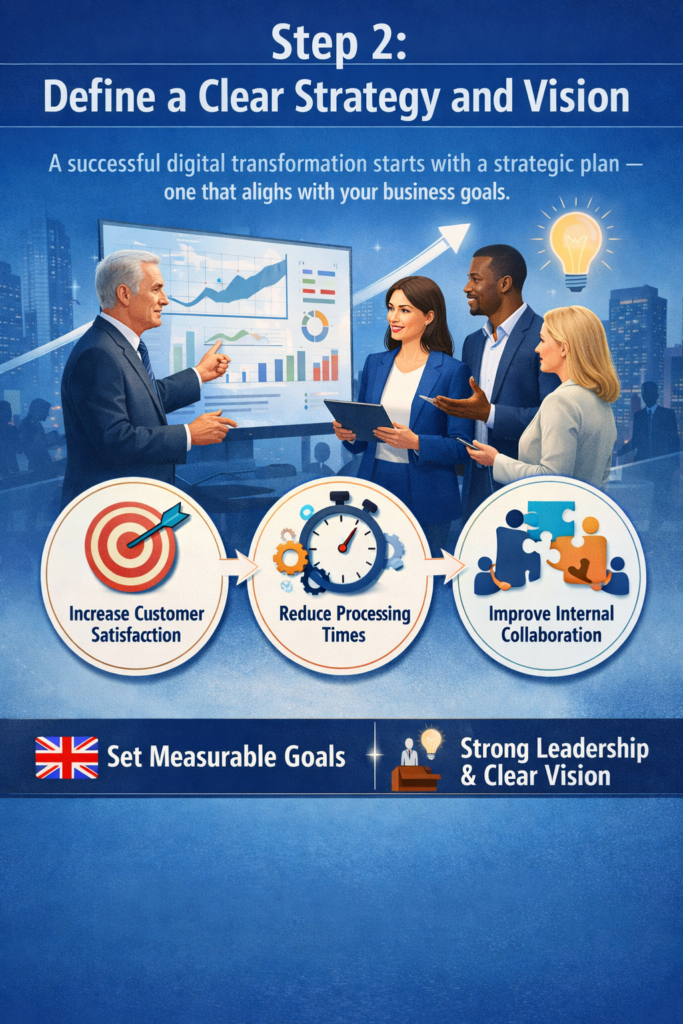
Step 2: Define a Clear Strategy and Vision
A successful digital transformation starts with a strategic plan — one that aligns with your business goals.
UK firms typically begin by defining measurable goals: increase customer satisfaction, reduce processing times, improve internal collaboration. Strong leadership support and a clear vision help reduce friction across teams.
Step 3: Choose Digital Tools That Fit Your Needs
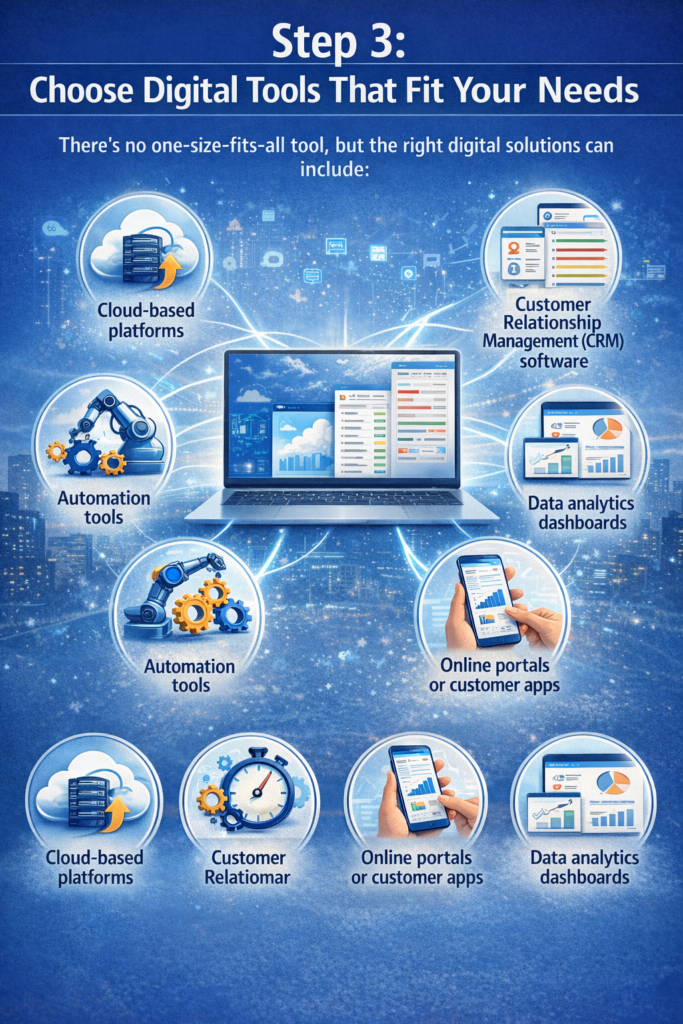
There’s no one‑size‑fits‑all tool, but the right digital solutions can include:
- Cloud‑based platforms
- Customer Relationship Management (CRM) software
- Automation tools
- Online portals or customer apps
- Data analytics dashboards
Selecting the right tools comes down to matching technology with business priorities.
Real UK Case Study: Local Government Goes Digital
Lewisham Council Transformation
Lewisham Council saw an opportunity to improve citizen services by replacing slow, manual processes with a digital platform. They migrated offline services into digital channels, built a new user‑centric platform using modern frameworks and integrated customer interaction tools like CRM systems.
Outcome:
- Faster service delivery
- Improved customer satisfaction
- Reduced service costs
This example shows how even traditional public services can modernise successfully when they focus on user experience and operational efficiency.

Case Study: Insurance Company Automates Manual Operations
In the UK insurance industry, one major insurer relied on entirely manual handling of incoming documents. Letters, forms, and claims had to be processed by hand — slowing response times and driving up costs.
The company adopted a digital mailroom and document management system that automated the indexing and routing of documents directly into linked business systems.
Outcome:
- Manual processing eliminated
- Workflows connected across systems
- Customer response times improved
This case highlights how digitization can tackle deep‑seated inefficiencies even in established, compliance‑driven sectors.

Case Study: Creative Agency Breaks Free of Legacy Systems
A creative services agency in Liverpool moved away from legacy desktop tools and scattered spreadsheets. They introduced a cloud‑based project management and collaboration platform that unified:
- Real‑time project tracking
- Collaborative feedback tools
- Integrated communication channels
- Time tracking and billing
The result was a dramatic improvement in collaboration, transparency, and productivity — enabling the business to scale without growing chaos.
Step 4: Empower People Through Training and Culture Change
Technology alone won’t drive success — your people will.
Resistance to change is one of the biggest barriers to digitization. Workplaces that invest in training, involve staff in decision‑making, and set clear expectations tend to see faster adoption and better results.
Encourage cross‑functional teams to experiment with digital tools and embed a culture of continuous improvement.
Step 5: Monitor Progress and Iterate
Digitization isn’t a destination — it’s a journey.
After implementation:
- Track performance metrics
- Collect user feedback
- Identify further problems to solve
Continuous evaluation helps businesses refine digital initiatives over time and adapt to evolving customer expectations.
What Success Looks Like
Successful digitization can dramatically reshape a business:
- Faster and more accurate operations
- Empowered staff working with better tools
- Enhanced customer experience
- Greater ability to innovate and respond to market change
UK organisations — whether public sector, insurance, creative agencies or educational institutions — have demonstrated real gains by migrating manual processes into modern digital solutions.
Conclusion
Moving from manual processes to modern digital ways of working isn’t just a technology upgrade — it’s a strategic transformation that requires planning, investment, and cultural change.
Start with a clear assessment, build a strategy, choose the right tools, involve your people, and keep measuring success. With the right roadmap and real‑world examples as inspiration, UK businesses can thrive in a world where digital is no longer optional — it’s expected.